Invited keynotes
Perspectives spanning tactile hardware, learning, and real-world manipulation, with dedicated time for Q&A.
Bringing hardware, learning, and control together to make touch a core sensing modality for next-generation robotic systems.
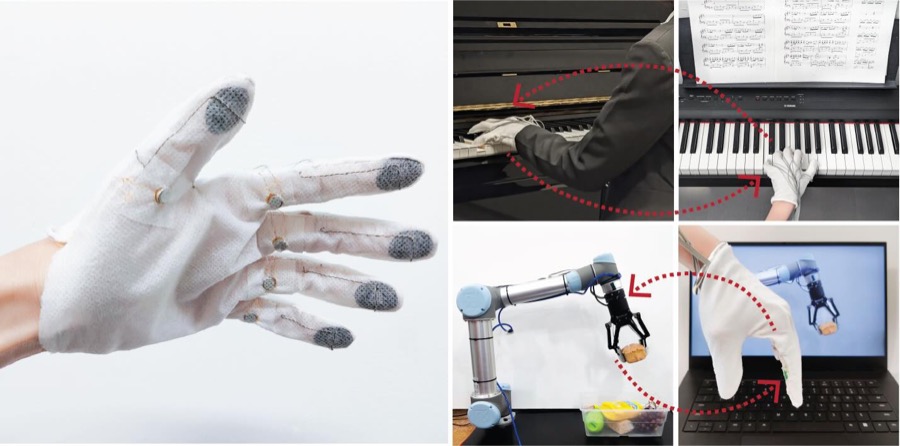
From human touch
to robot dexterity
01 / Introduction
Tactile sensing is a key enabling technology for real-world, general-purpose embodied robotic intelligence. It is essential for detecting contact, estimating physical properties, and responding appropriately during real-world interaction. Yet, despite decades of research, robotic touch still lags far behind human capability in sensing resolution, surface coverage, response speed, robustness, and ease of integration.
Compared with vision, tactile sensing remains less standardized and less widely used, especially for dexterous manipulation, contact-rich control, and data-efficient robot learning. This workshop brings together researchers working on tactile sensor design, contact modeling, simulation, manipulation, robot learning, and multimodal perception to examine how touch can advance robotic dexterity.
The field is moving beyond standalone sensor development toward integrated tactile pipelines that connect hardware, representation learning, control, and real-world deployment. We will focus on scalable tactile skins, tactile simulation, visuo-tactile learning, tactile foundation models, and sim-to-real transfer—especially for complex, changing contacts involving multiple fingers and joints.
02 / Invited speakers
Confirmed invited speakers from academia and industry.
03 / Panel discussion
A guided discussion on the open questions shaping tactile sensing and dexterity.

Johns Hopkins University

Johns Hopkins University

Massachusetts Institute of Technology

Technical University of Munich

Columbia University

Co-founder, Stealth Startup

Carnegie Mellon University
04 / Schedule
· Rooms 408 & 409, Pittsburgh. All times are local (EDT, GMT−4).
Contact-Grounded Policy: Dexterous Visuotactile Policy with Generative Contact Grounding
Multi-Resolution Tactile Imitation Learning for Contact-Rich Robotic Manipulation
Posters are 4 ft × 4 ft.
Learning Hierarchical Tactile-Aware Policies for Quadrupedal Loco-Manipulation
MagPie: A Magnetic-Piezoresistive Tactile Skin
Moderated by Greg Hager, with Krishna Murthy Jatavallabhula, Edward Adelson, Gordon Cheng, Binghao Huang, Raunaq Bhirangi, and Ruihan Gao.
What we will examine
Present state-of-the-art advances in tactile sensing hardware, sensor modeling, and large-area tactile skin design.
Highlight how tactile sensing improves dexterous grasping, in-hand manipulation, contact-rich interaction, and robot adaptation in unstructured environments.
Connect tactile sensing with robot learning, including self-supervised learning, multimodal policy learning, tactile simulation, and sim-to-real transfer.
Identify open research challenges and foster a shared research agenda for tactile sensing as a core component of embodied intelligence.
05 / Workshop format
Perspectives spanning tactile hardware, learning, and real-world manipulation, with dedicated time for Q&A.
A coffee-break session featuring up to 20 posters alongside interactive tactile systems and research prototypes. Posters are 4 ft × 4 ft.
Up to four selected papers will be invited to give concise 10-minute presentations during the workshop.
Open problems in simulation, multimodal learning, benchmarking, and scalable sensor design—moderated by the organizers.
Early-career researchers are especially encouraged to participate through poster submissions and short contributed talks. Workshop papers are non-archival; work already submitted to or accepted by other venues is welcome.
Discussion-led · Cross-disciplinary · In person06 / Call for papers
We welcome 4–8 page papers describing ongoing research, recently completed work, or previously published or concurrently submitted work. Submissions should follow the IROS paper format. The workshop is non-archival, and we particularly encourage early-stage ideas, emerging research directions, system demonstrations, datasets, benchmarks, and work in progress.
Authors of accepted submissions will be invited to present during the poster and demo session. Up to four submissions will also be selected for 10-minute spotlight presentations during the workshop. Submissions will be evaluated by external reviewers, and at least one author of each accepted submission is expected to attend and present in person.
We especially encourage live demonstrations of tactile sensing systems, dexterous manipulation platforms, simulation tools, datasets, and interactive research prototypes.
Demo proposals follow the same 4–8 page format and use the same OpenReview portal. Prefix the submission title with “Live Demo”. Accepted demonstrations will be presented alongside the posters.
Topics of interest
Scalable tactile sensors, tactile skins, and sensor integration
Tactile modeling, simulation, synthesis, and sim-to-real transfer
Tactile perception, representation learning, and multimodal learning
Tactile-driven grasping, dexterous manipulation, and contact-rich control
Human demonstrations, wearable sensing, and human-to-robot skill transfer
Tactile datasets, benchmarks, standardization, and real-world deployment
07 / Organizers